

Who We Represent
Construction defects affect property owners differently depending on the type of property involved. We handle cases involving single-family homes, condominiums, apartments, and commercial buildings, each with its own legal considerations under Washington law.
Why Choose Levy | von Beck | Comstock | Chastain for Your Construction Defect Case
Since 1983, the construction defect attorneys at Levy | von Beck | Comstock | Chastain have been helping homeowners, condominium associations, and commercial building owners pursue construction defect claims.
Each step you take toward seeking a remedy – from selecting a forensic expert, to the manner in which you notify your builder, to the determination of whether you have a potential claim under your own insurance policy – requires prompt but careful consideration of all issues and potential consequences. And no two cases are the same, so you need and deserve experienced lawyers who will fully and quickly analyze your situation and will explore every possible avenue of recovery for you. We work closely with engineers and construction experts of all disciplines to determine sources and causes of defects as well as the best, most cost-effective means of repair.
Meet our experienced team of construction defect attorneys.
What is a Construction Defect?
A construction defect occurs when a builder, contractor, or subcontractor fails to follow permitted plans, specifications, or applicable Washington state building codes, resulting in a condition that requires repair, reduces the property’s value, or causes additional damage.
Not every imperfection is a legally actionable defect. Whether a defect gives rise to a valid claim depends on factors including the nature and severity of the problem, whether it caused actual damage, and the applicable statute of limitations. An experienced construction defect attorney can help you evaluate whether what you are seeing rises to the level of a claim worth pursuing.
Client Reviews
Common Construction Defect Claims in Washington State
Water Intrusion
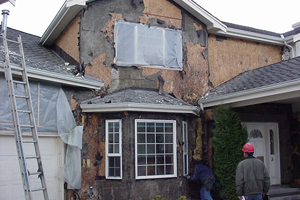
Water intrusion is among the most common signs of a serious construction defect, particularly here in the Pacific Northwest, in both residential and commercial settings. It typically stems from failures in the building envelope, the barrier between a building’s indoor and outdoor components that keeps weather out.
What makes water intrusion especially damaging is that it can travel from a breach in an exterior transition point into the wall cavity, down framing members, and through interior sheetrock or trim before finally becoming visible. Signs of water intrusion can include sweating windows, water staining on windowsills, mold growth, insect infestation, or warping of hardwood floors.
Cracking and settling driveways and sidewalks due to inadequate soil compaction
When soil beneath a concrete surface is not properly compacted before installation, it cannot adequately support the weight above it, leading to cracking and settling of driveways and sidewalks.
This defect is typically rooted in improper site preparation during construction, not normal wear and tear.
Improperly installed hardwood floors
Movement or warping of hardwood floors is a telltale sign of improperly installed hardwood flooring, defective subfloor preparation, or moisture-related issues. Construction defects in hardwood floors can be caused by poor subfloor preparation, inadequate fastening, or improper installation, leading to buckling, gaps, and, over time, becoming a safety hazard. Movement or warping of hardwood floors is a telltale sign of improperly installed hardwood flooring, defective subfloor preparation, or moisture-related issues. Construction defects in hardwood floors can be caused by poor subfloor preparation, inadequate fastening, or improper installation, leading to buckling, gaps, and, over time, becoming a safety hazard.
Improper drainage
With the amount of rain we receive in the PNW, improper drainage can lead to significant long-term damage if property grading or drainage is not installed properly.
Improper grading or drainage installation prevents water from moving away from the structure, which can result in pooling around the foundation, water intrusion, and long-term damage to the building. This construction defect may not become apparent until years after construction.
With the amount of rain we receive in the PNW, improper drainage can lead to significant long-term damage if property grading or drainage is not installed properly.
Improper grading or drainage installation prevents water from moving away from the structure, which can result in pooling around the foundation, water intrusion, and long-term damage to the building. This construction defect may not become apparent until years after construction.
Siding and cladding issues
While most construction defects may not be apparent right away, siding and cladding issues often go undetected for years, allowing significant damage to occur. Wind-driven rain can penetrate exterior siding due to poor construction methods, allowing water to infiltrate the walls and framing.
Decaying wood resulting from this kind of damage can eventually lead to total structural failure, making siding and cladding issues an incredibly concerning construction defect.